21×
more lead¹

Building the Raw Fit check...
Why Raw
Your dog's body still runs on the same blueprint it always has. Their stomach is highly acidic. Their digestive tract is short and fast. Their teeth are built to tear, crush, and consume animal tissue. Every part of their anatomy points toward fresh, whole-animal food.
Commercial Pet Food
That blueprint didn't disappear when commercial pet food arrived. Dogs adapted to living beside us, but the way their bodies process food remains remarkably similar to the animals they descended from.
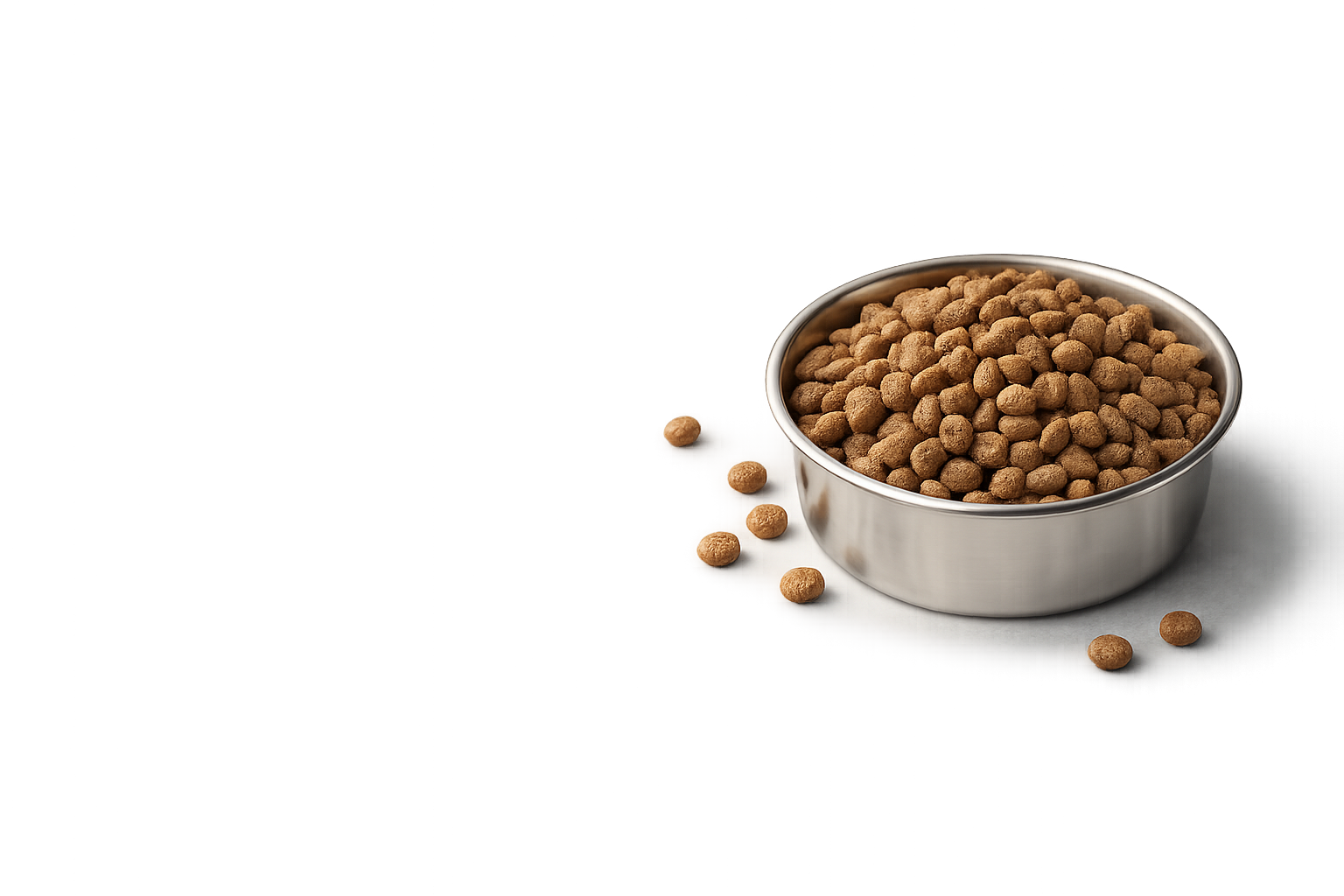
Kibble fights that design. Extreme heat destroys nutrients, then synthetic vitamins are sprayed back on just enough to meet a legal minimum. The goal is shelf life and convenience, not the animal eating it.
Commercial kibble became popular because it was inexpensive to manufacture, easy to transport, and could sit on a shelf for months. It solved a problem for people and for manufacturers. It wasn't created because dogs suddenly evolved to need highly processed food.
in typical dry kibble
¹ Clean Label Project, 2026 Dog Food Study. Average lab results, 50 dry vs. 18 fresh/frozen foods. Raw Dawg was not tested.
² Roberts et al., J. Anim. Physiol. Anim. Nutr., 2018. Typical kibble, dry-matter basis.

Instead of building nutrition through processing and supplementation, it starts with real ingredients that stay closer to their natural state. Muscle meat, bone, organs, and connective tissue provide nutrition in the form a dog's body was designed to recognize.
Every dog is different, and no single diet is right for every situation. But when owners transition thoughtfully and appropriately, many notice changes where nutrition often shows itself first: healthier coats, improved stool quality, steadier energy, and better overall body condition.
We aren't reinventing canine nutrition.
We're simply following the original blueprint.
Your Cart is Empty.